
In the Wreckage of ISIS: An Examination of Challenges Confronting Detained and Displaced Populations in Northeastern Syria
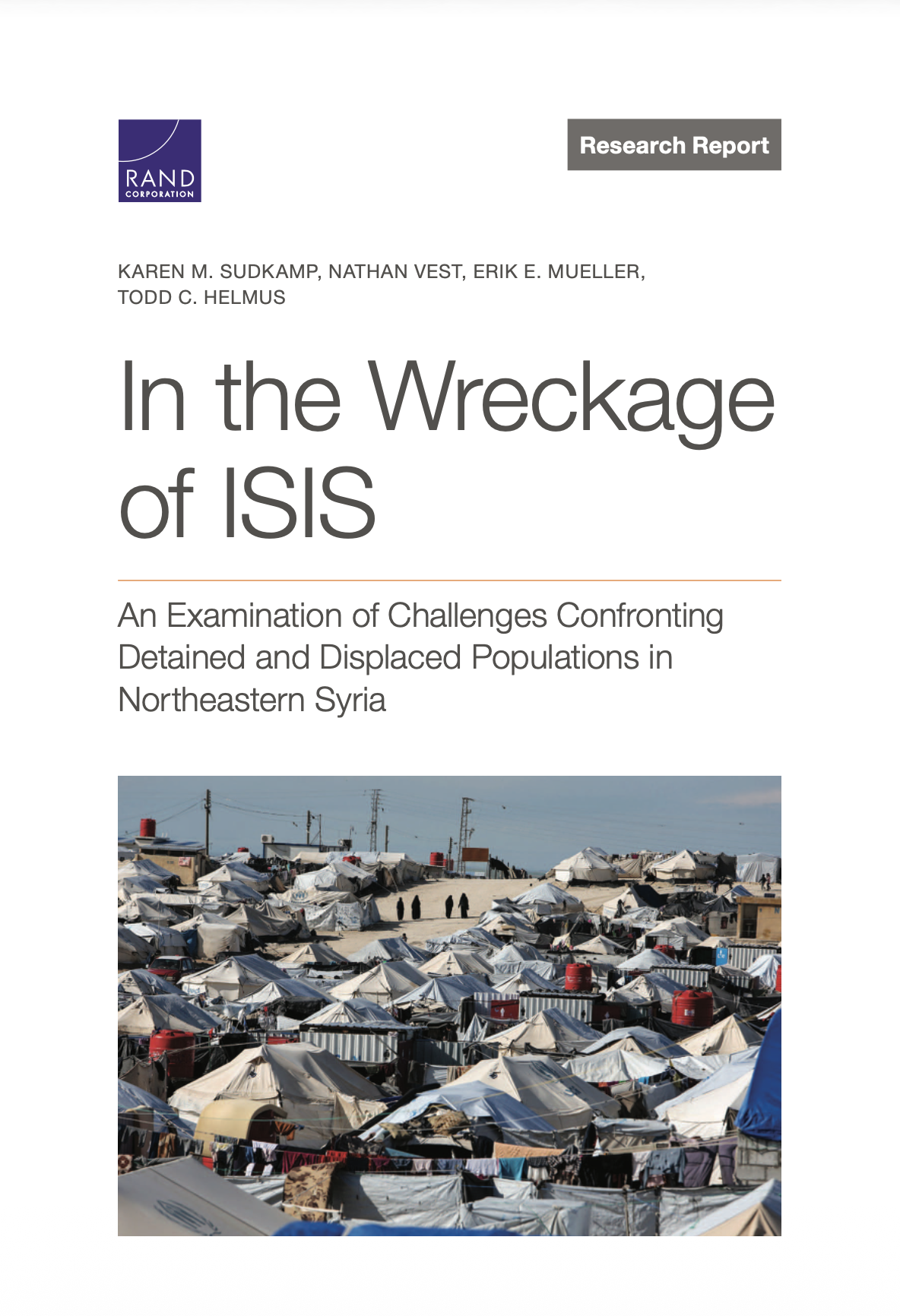
This RAND report examines al-Hol and Roj, the two northeastern Syria camps where families of ISIS fighters live intermingled with displaced Syrian and Iraqi civilians. Ideological disposition varies widely—ardent ISIS supporters continue trying to enforce the group's rule, but most Syrian and Iraqi residents don't openly support ISIS. Radicalization risk is driven by familiar displacement-camp dynamics: thin sanitation and health care, inadequate education, scarce employment, weak security, smuggling networks tied to external ISIS members, and restricted freedom of movement that recruiters exploit.
The authors argue political will is the binding constraint, and recommend a layered response: develop a legal-status process for foreign residents, resource judicial systems in the Autonomous Administration of North and East Syria to try suspected ISIS affiliates, and build safe repatriation pathways for adolescent boys—the most vulnerable to recruitment. Pair that with more funding for housing, health, and security services, an international fund with mandatory contributions from donor nations, and greater integration with local communities, isolating only the most radicalized residents.