
Searchable Publication List
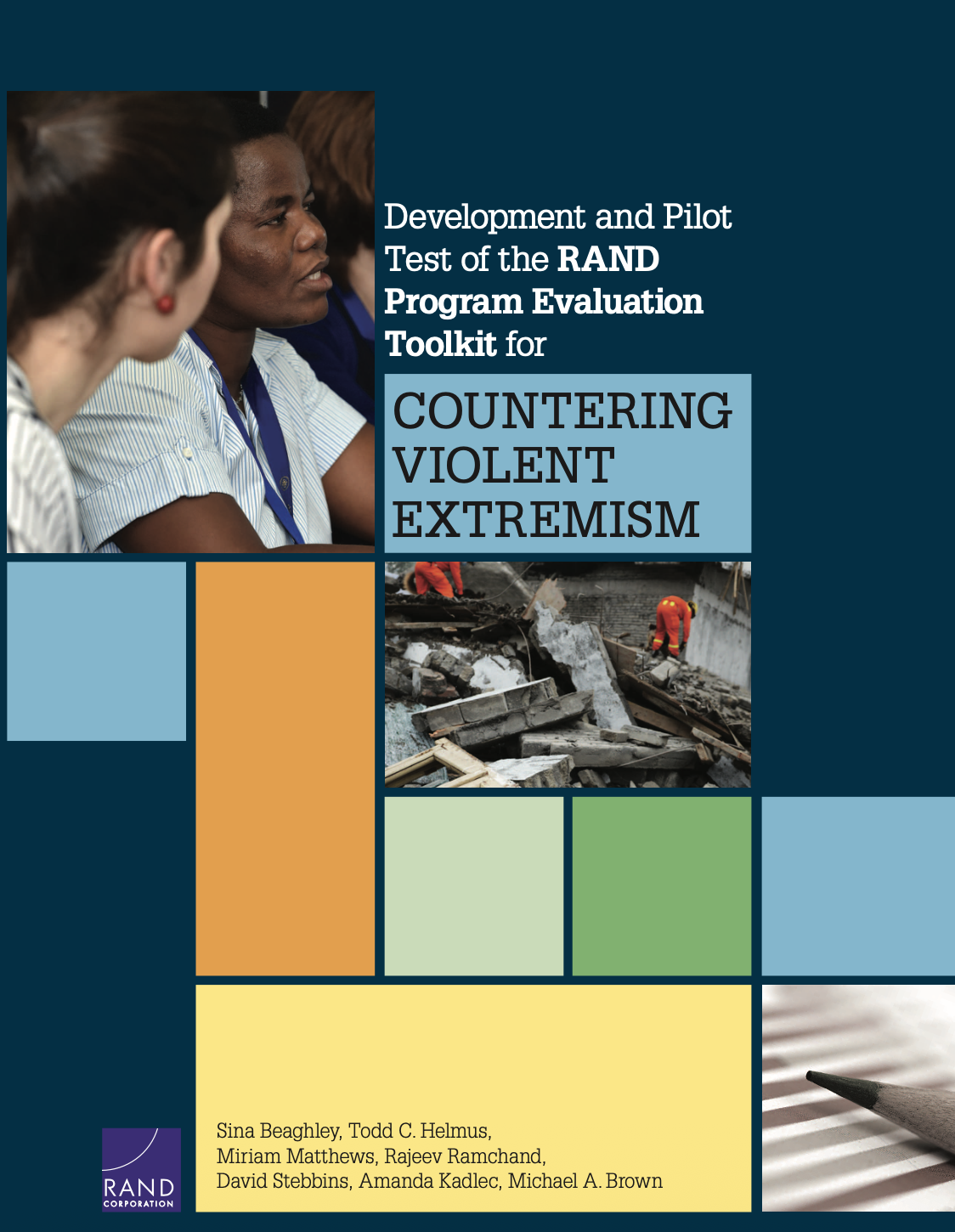
Development and Pilot Test of the RAND Program Evaluation Toolkit for Countering Violent Extremism
This RAND report introduces the Program Evaluation Toolkit for Countering Violent Extremism, built from a literature review, a program taxonomy, manager interviews, and pilot testing, to give community-based CVE programs the user-friendly checklists, worksheets, and templates needed to choose the most rigorous evaluation approach they can sustain and produce evidence on whether to improve, scale, or discontinue their activities.

Veteran Narratives of Support for Extremist Groups and Beliefs: Results from Interviews with Members of a Nationally Representative Survey of the U.S. Veteran Community
This RAND report draws on 2023 follow-up interviews with veterans who had endorsed extremist beliefs in a 2022 survey, finding that negative and traumatic experiences during service and transition are tightly interwoven with their paths into extremism—pointing to policy implications that will require further research to operationalize.
Violent Extremism in America: Interviews with Former Extremists and Their Families on Radicalization and Deradicalization
This RAND report draws on interviews with 32 former extremists and family members to map how people enter and exit extremist groups, finding that propaganda exposure is widespread, white supremacists typically self-recruit while Islamic extremists are more often pulled in top-down, and exits are usually supported by another person providing emotional, cultural, or material stability.
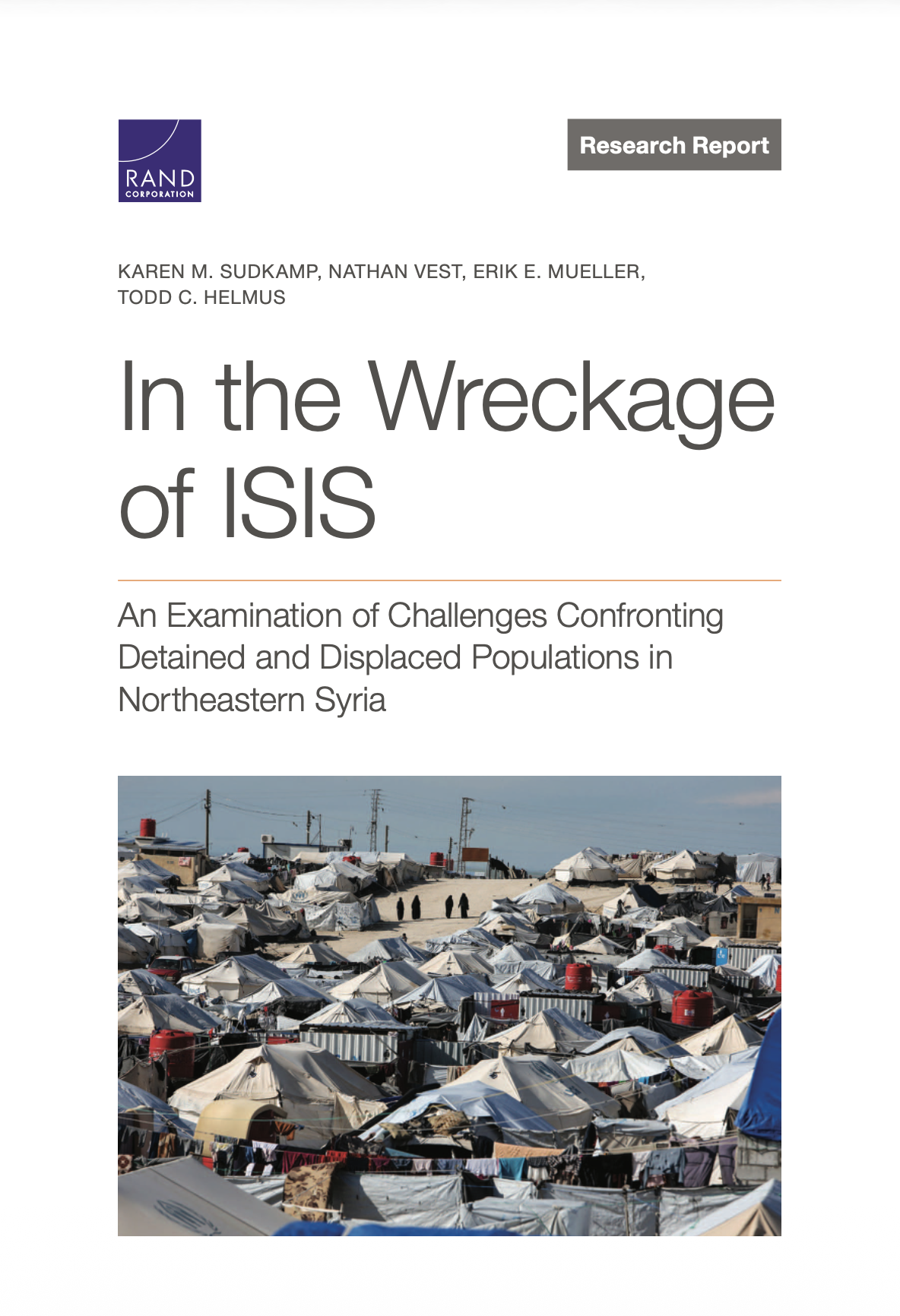
In the Wreckage of ISIS: An Examination of Challenges Confronting Detained and Displaced Populations in Northeastern Syria
This RAND report examines al-Hol and Roj camps in northeastern Syria, where ideologically mixed populations face radicalization risks from poor conditions, weak security, and external ISIS connections, and recommends legal-status processes, resourced judicial systems, repatriation pathways for vulnerable adolescents, an international donor fund, and greater integration with targeted isolation of the most radicalized residents.
What Prevention and Treatment of Substance Use Disorder Can Tell Us About Addressing Violent Extremism
This RAND Perspective draws on psychology, neuroscience, sociology, and public health evidence to argue that violent extremism shares meaningful features with substance addiction—persistent intrusive thoughts, situational triggers, and relapse risk—and uses that parallel to point toward new prevention and deradicalization approaches.
Promoting Online Voices for Countering Violent Extremism
This RAND report—which has influenced U.S. National Counterterrorism Center policy—argues that American Muslim CVE efforts online succeed when government and private funders act as facilitators rather than orchestrators, and recommends reducing CVE's national security framing, addressing community mistrust, investing in influential social media voices, and expanding both private and government funding.
Empowering ISIS Opponents on Twitter
This RAND Perspective draws on lessons from commercial marketing influencer strategies to identify recommendations for empowering ISIS opponents on Twitter.
Prevalence of Veteran Support for Extremist Groups and Extremist Beliefs: Results from a Nationally Representative Survey of the U.S. Veteran Community
This RAND survey of nearly 1,000 veterans finds no evidence that the veteran community as a whole supports violent extremism at higher rates than the general public, but flags that most veterans endorsing political violence (17.7%) are not tied to any specific group—leaving them potentially exposed to recruitment by emerging movements—with Marine Corps veterans showing the highest support across services.
RAND Program Evaluation Toolkit for Countering Violent Extremism
Created the national standard for measuring CVE program effectiveness. Mandated by the Department of Homeland Security for all terrorism prevention grant recipients.
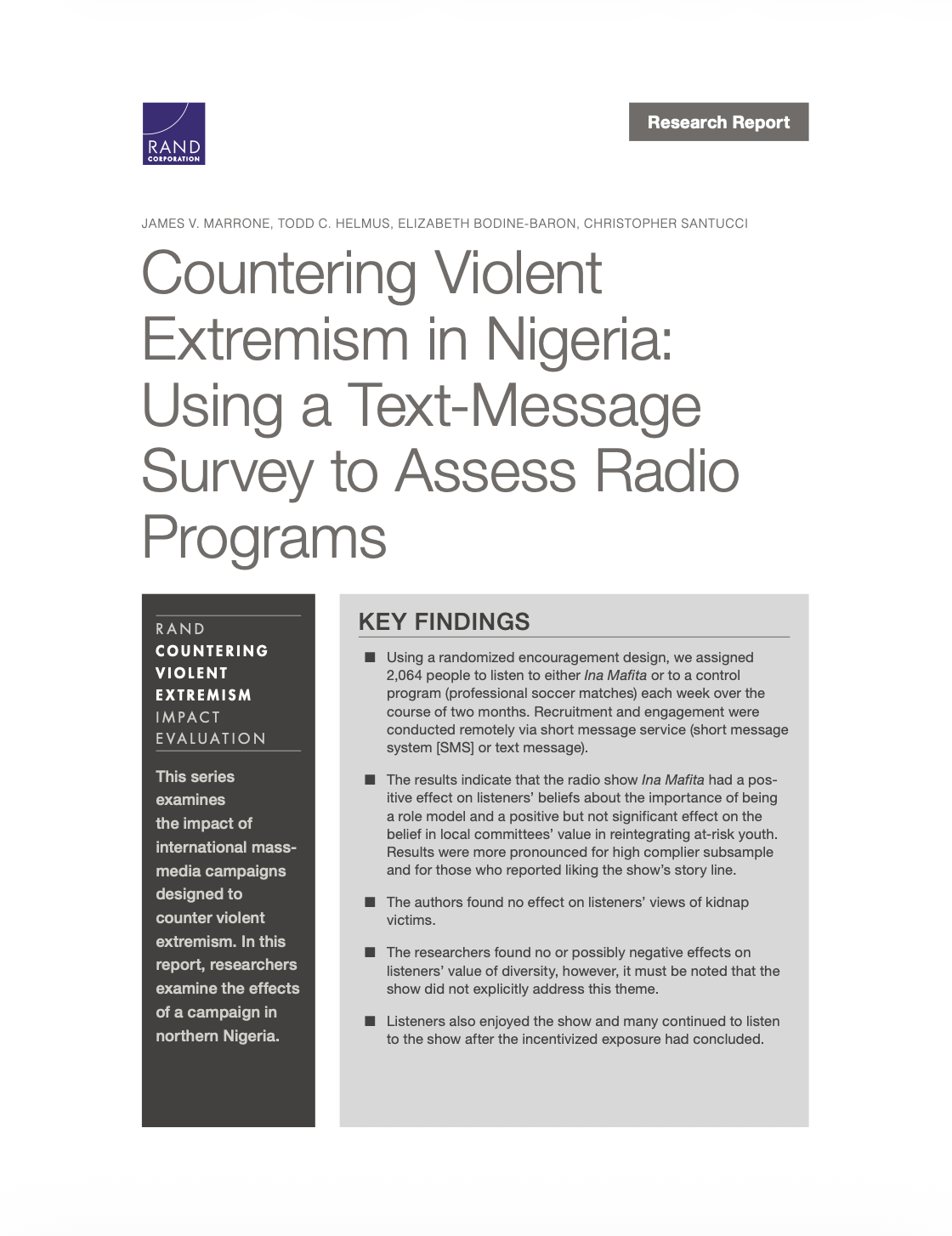
Countering Violent Extremism in Nigeria: Using a Test-Message Survey to Assess Radio Programs
This RAND report was part of a ground breaking set of studies that experimentally tested the impact of State Department counter violent extremism programs. This study, in a first of its kind, used text message surveys to assess the impact of CVE radio programs in Nigeria.
Social Science for Counterterrorism: Putting the Pieces Together
The authors report on an aggressively interdisciplinary project to survey and integrate the scholarly social-science literature relevant to counterterrorism.
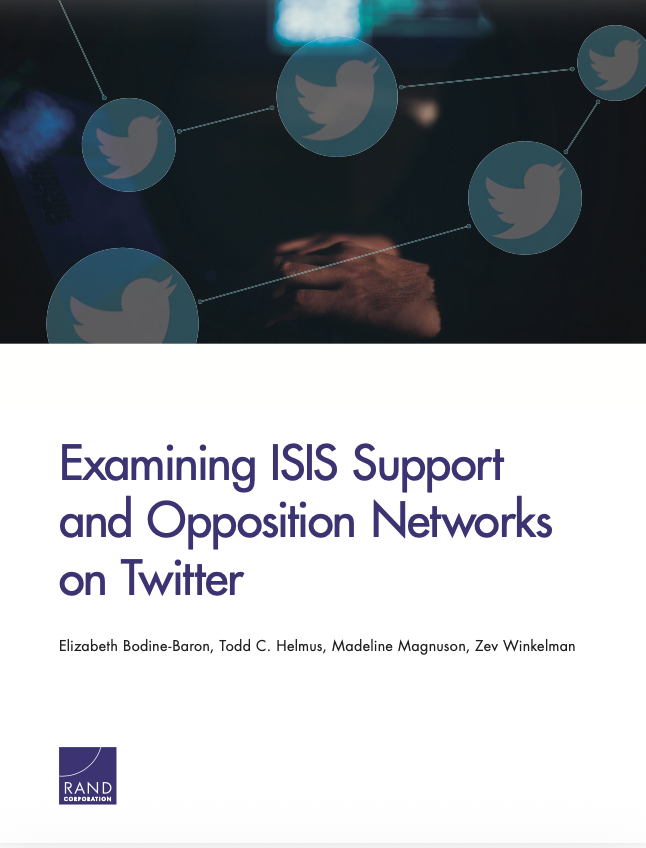
Examining ISIS Support and Opposition Networks on Twitter
Pioneered the integration of community detection algorithms with lexical fingerprinting for scaled adversary network identification on social media platforms.
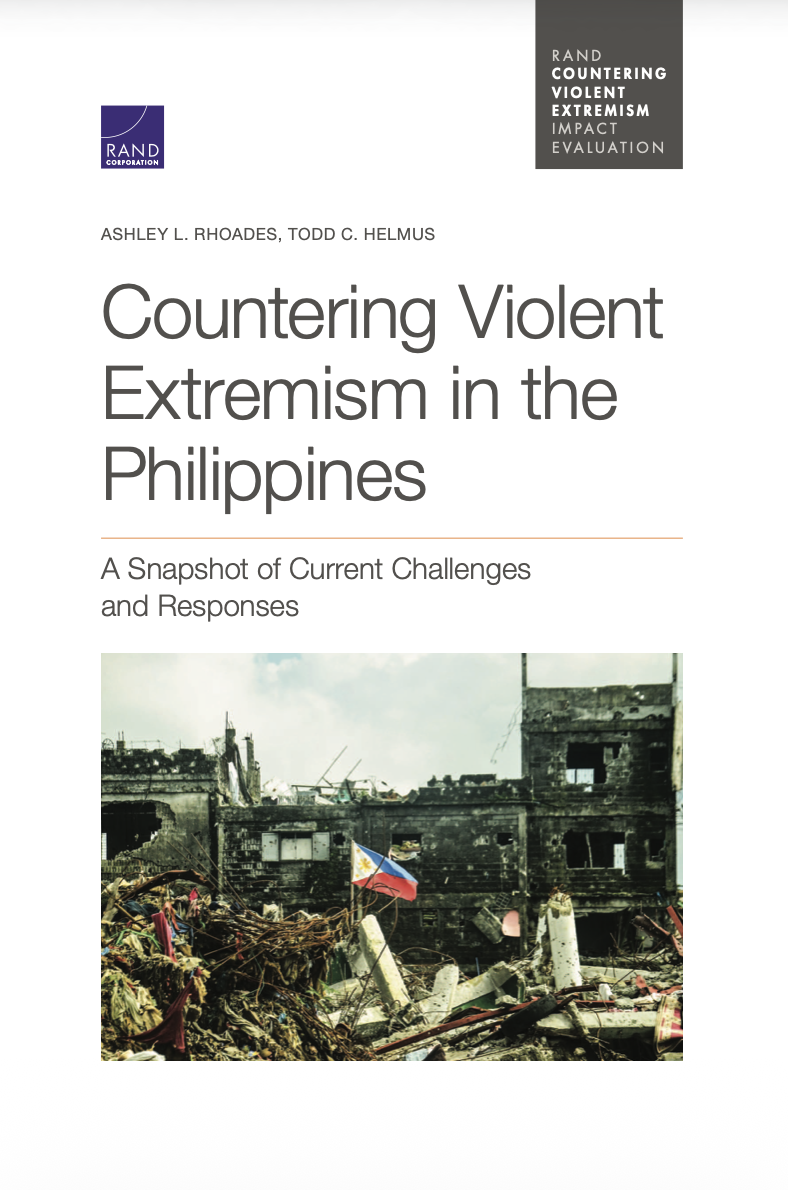
Countering Violent Extremism in the Philippines: A Snapshot of Current Challenges and Responses
This RAND report surveys the threat picture and CVE programming in the Philippines, finding that entrenched poverty, communal divisions, and government grievances continue to drive radicalization while heavy-handed government counterterrorism risks fueling it further, non-kinetic government programs suffer from poor credibility and coordination, and nongovernmental efforts produce some wins but operate as microcampaigns without rigorous evaluation built in.
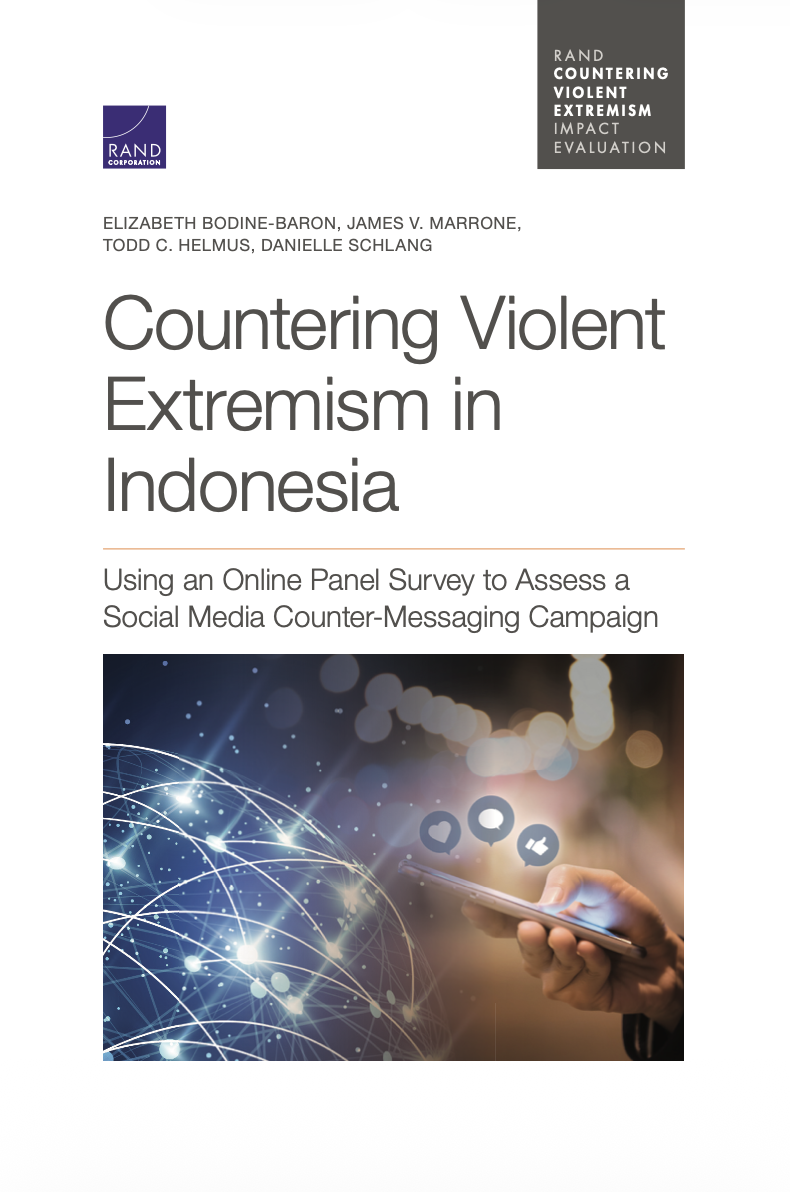
Countering Violent Extremism in Indonesia: using an Online Panel Survey to Assess a Social Media Counter-Messaging Campaign
This RAND evaluation was part of a ground breaking set of studies experimentally testing the impact of Department of State funded counter violent extremism programs.
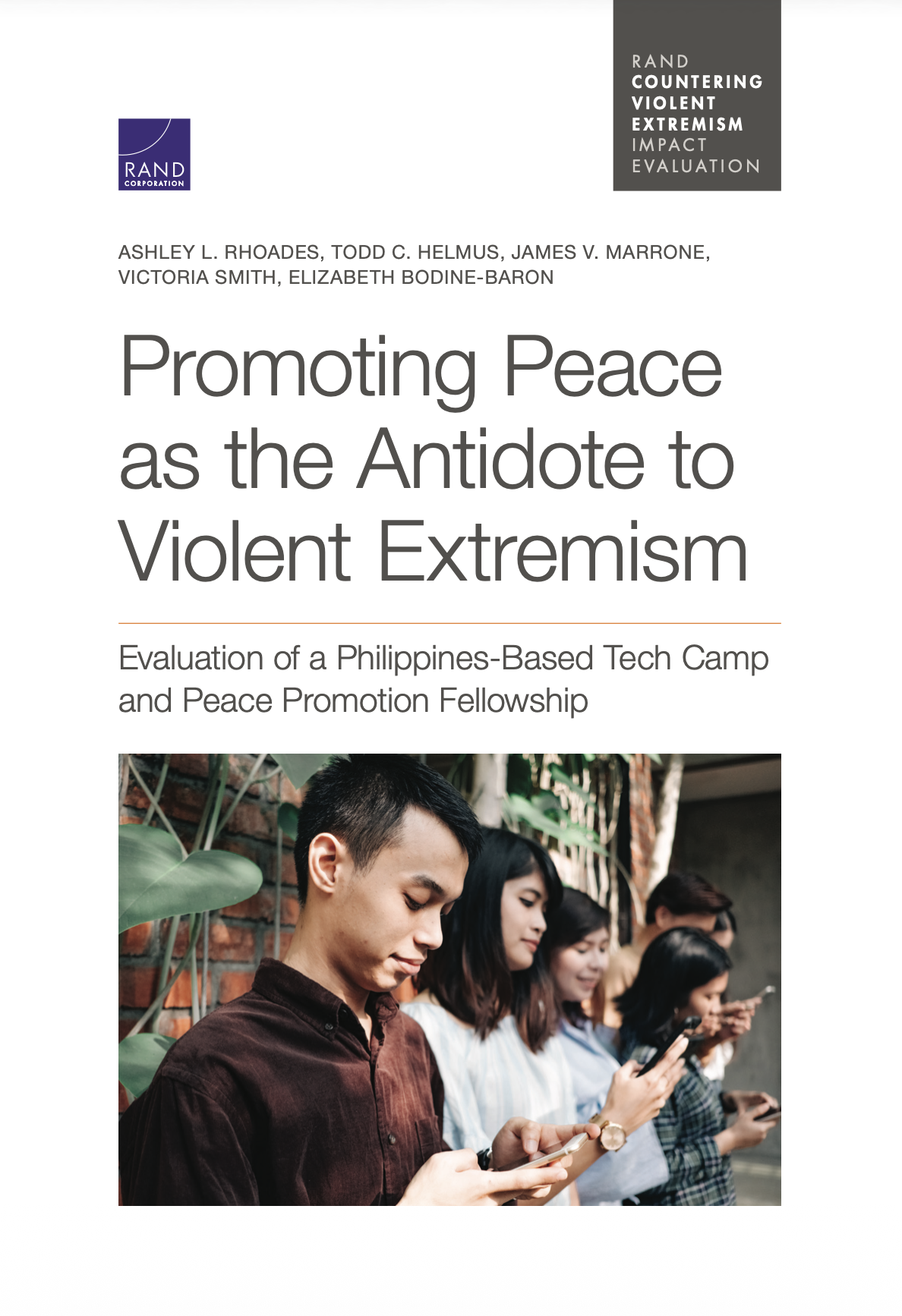
Promoting Peace as the Antidote to Violent Extremism: Evaluation of a Philippines-Based Tech Camp and Peace Promotion Fellowship
This RAND evaluation of Equal Access International's Mindanao CVE training and Peace Promotion Fellowship finds high participant satisfaction and successful community-based projects, and recommends tighter program design, more dedicated coaching staff, contingency planning, attention to fellow credibility, and more rigorous evaluation.
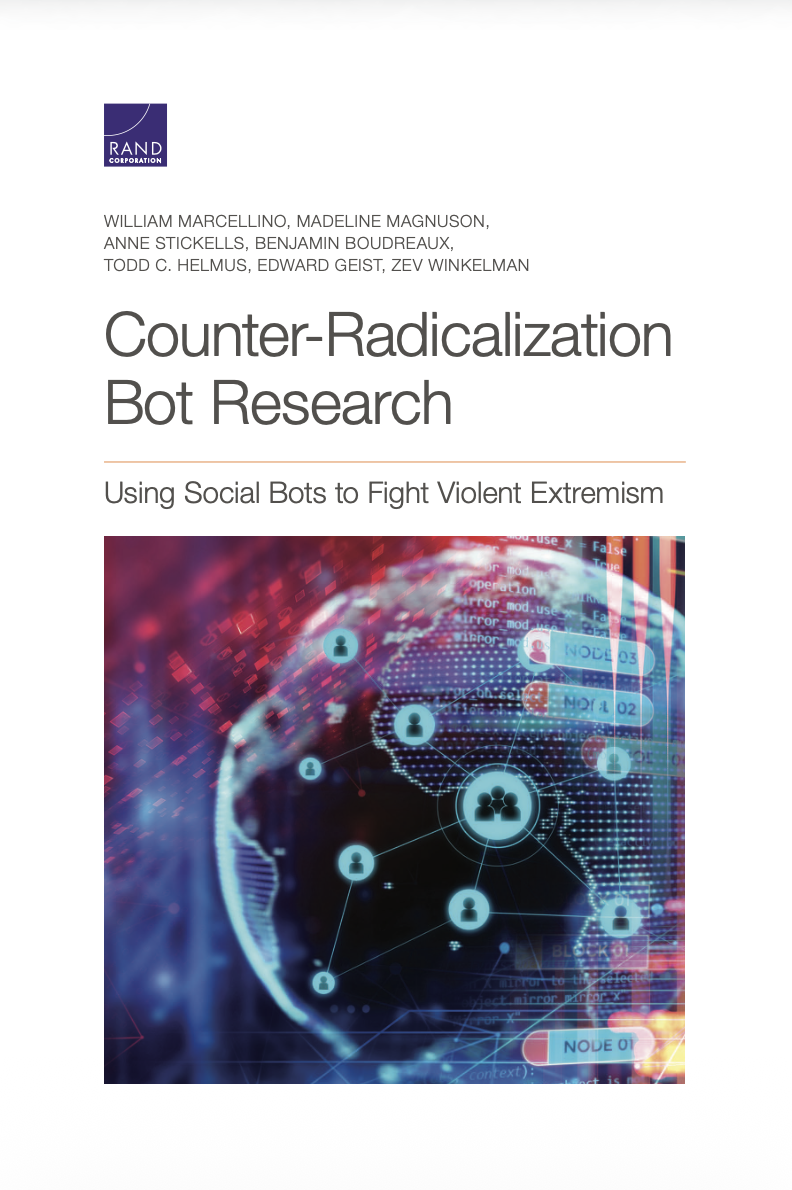
Counter-Radicalization Bot Research: Using Social Bots to Fight Violent Extremism
This RAND report asks whether social bots—automated accounts capable of detecting targets and delivering counter-messaging at scale—could help close that narrow window. The answer: technically feasible, but the harder questions are legal, ethical, and geopolitical.
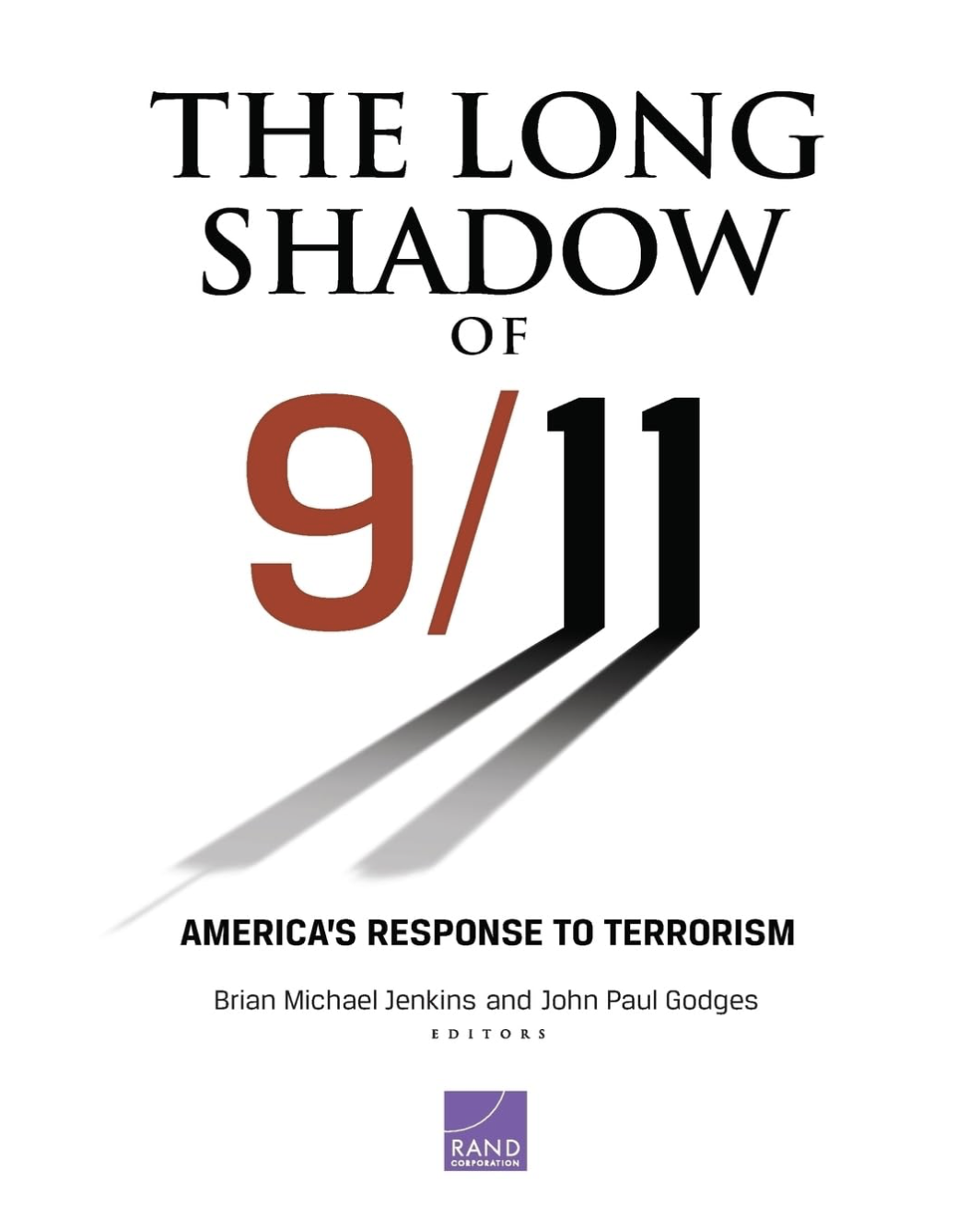
The Long Shadow of 9/11: America’s Response to Terrorism
This book provides a multifaceted array of answers to the question, In the ten years since the 9/11 terrorist attacks, how has America responded? In a series of essays, RAND authors lend a farsighted perspective to the national dialogue on 9/11's legacy.
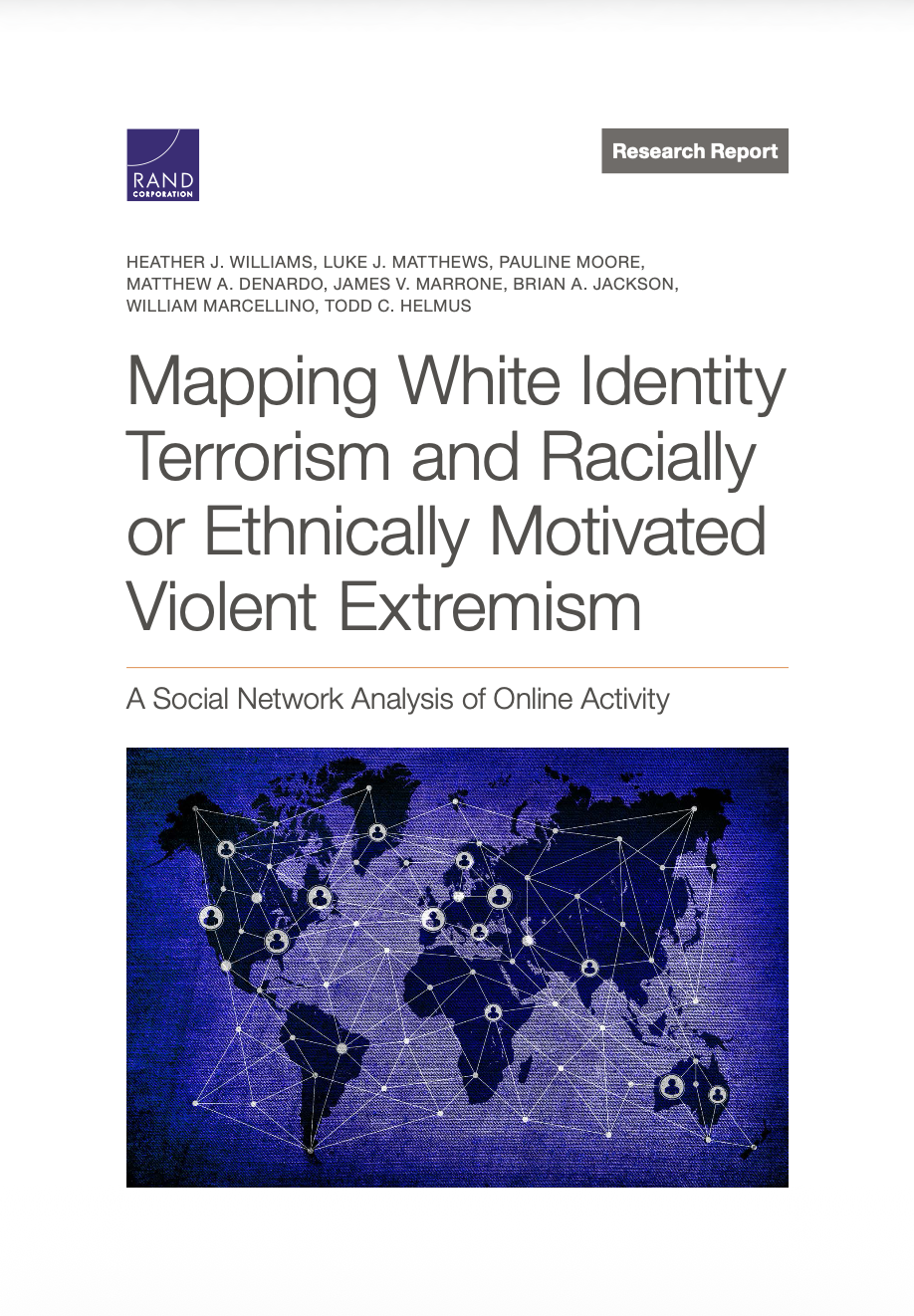
Mapping White Identity Terrorism and Racially or Ethnically Motivated Violent Extremism: A Social Network Analysis of Online Activity
This RAND report finds that the global online REMVE network is primarily fueled by U.S. users and that, because the movement is post-organizational and ideologically entrenched, the U.S. needs a multifaceted national counter-REMVE strategy rather than one centered on specific groups or actors.

Barriers to the Broad Dissemination of Creative Works in the Arab World
This monograph examines the barriers to the broad dissemination of such works, with a focus on Arabic literature, and suggests ways in which nongovernmental organizations, international allies, and the U.S. government can assist Arab writers and artists in overcoming these barriers.
Assessment of the State and Local Anti-Terrorism Training (SLATT) Program
The authors of this study assessed the State and Local Anti-Terrorism Training (SLATT) Program which is designed to provide counterterrorism training to state, local, and tribal law enforcement personnel.