
Searchable Publication List
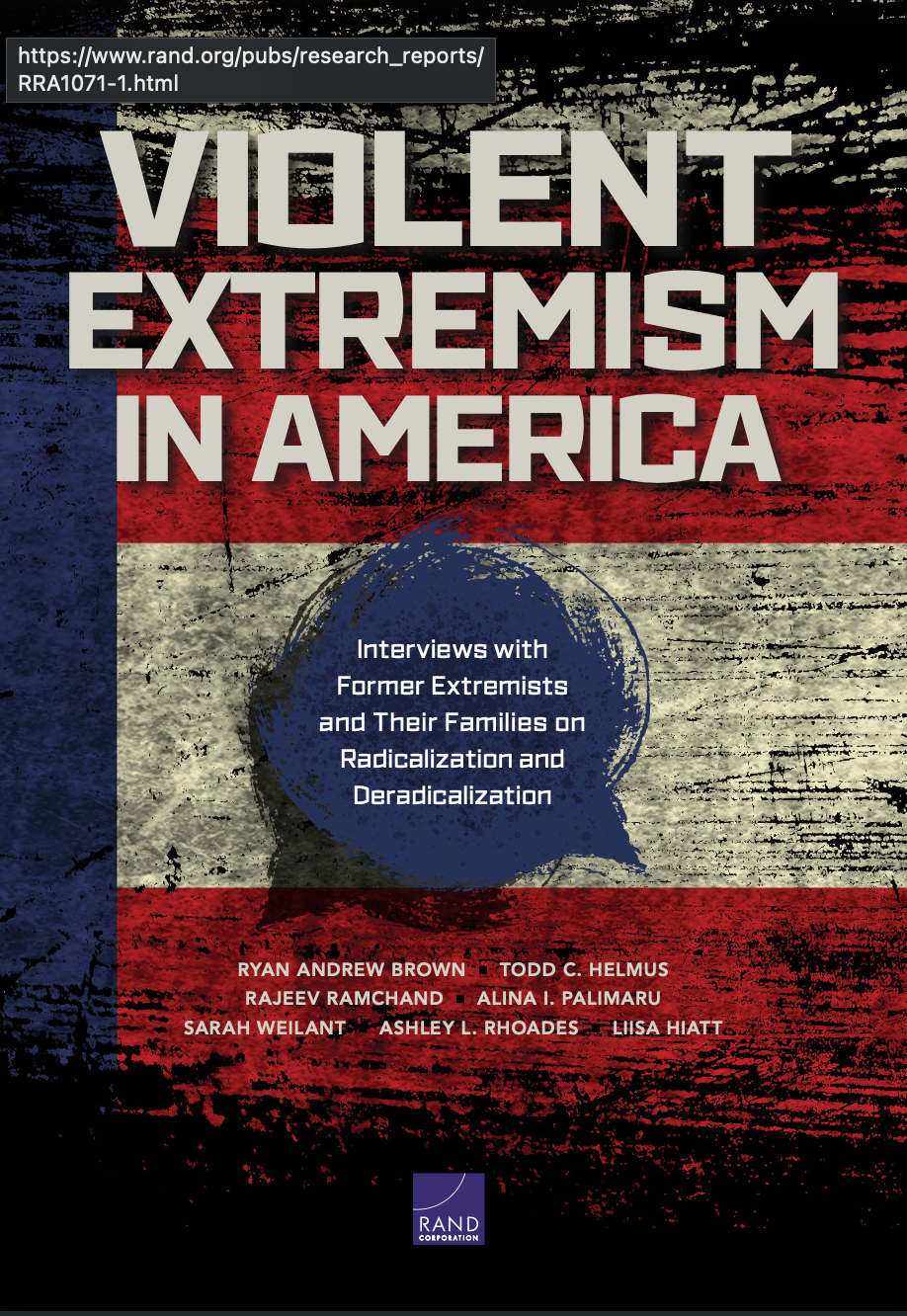
Violent Extremism in America: Interviews with Former Extremists and Their Families on Radicalization and Deradicalization
This RAND report draws on interviews with 32 former extremists and family members to map how people enter and exit extremist groups, finding that propaganda exposure is widespread, white supremacists typically self-recruit while Islamic extremists are more often pulled in top-down, and exits are usually supported by another person providing emotional, cultural, or material stability.
What Prevention and Treatment of Substance Use Disorder Can Tell Us About Addressing Violent Extremism
This RAND Perspective draws on psychology, neuroscience, sociology, and public health evidence to argue that violent extremism shares meaningful features with substance addiction—persistent intrusive thoughts, situational triggers, and relapse risk—and uses that parallel to point toward new prevention and deradicalization approaches.
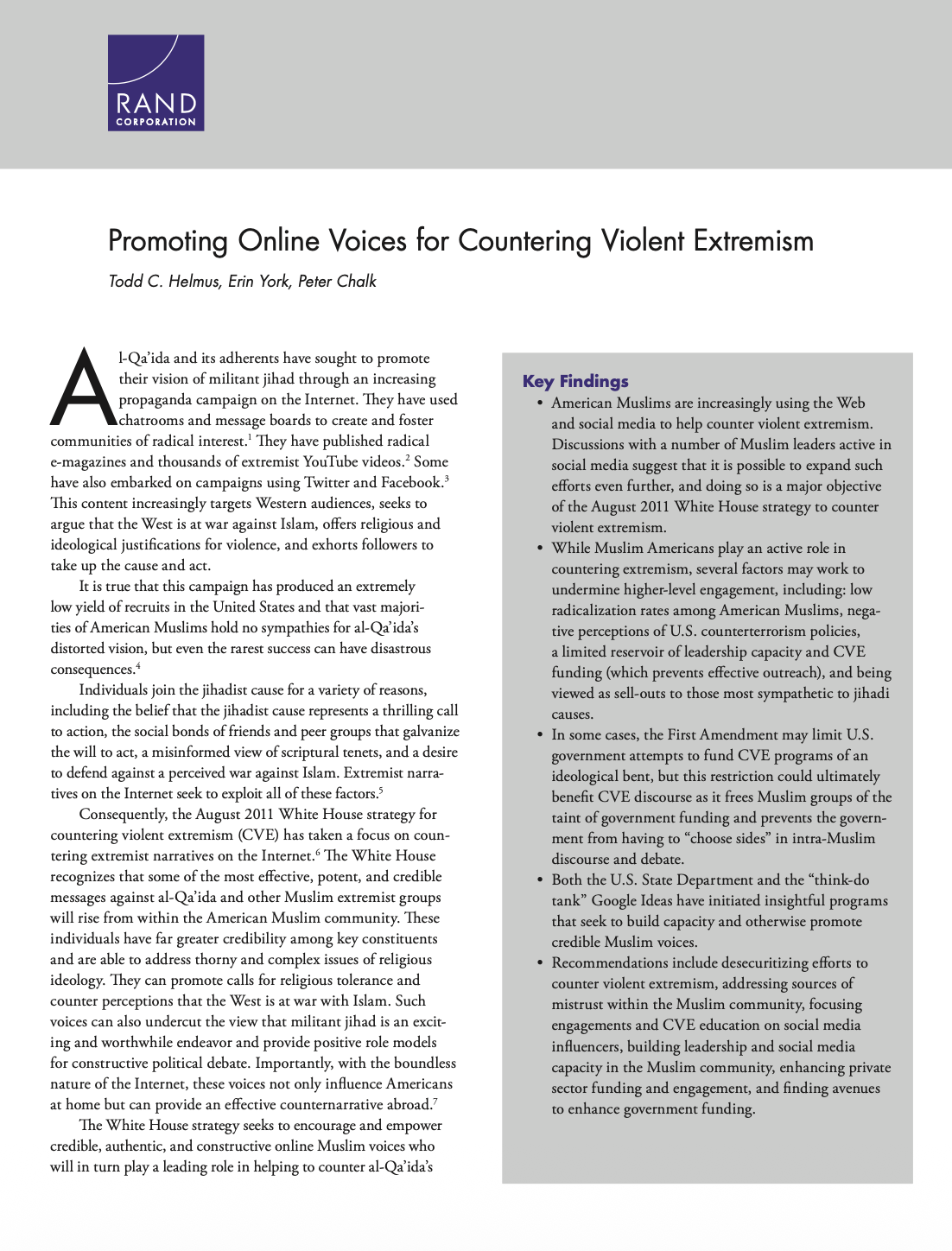
Promoting Online Voices for Countering Violent Extremism
This RAND report—which has influenced U.S. National Counterterrorism Center policy—argues that American Muslim CVE efforts online succeed when government and private funders act as facilitators rather than orchestrators, and recommends reducing CVE's national security framing, addressing community mistrust, investing in influential social media voices, and expanding both private and government funding.
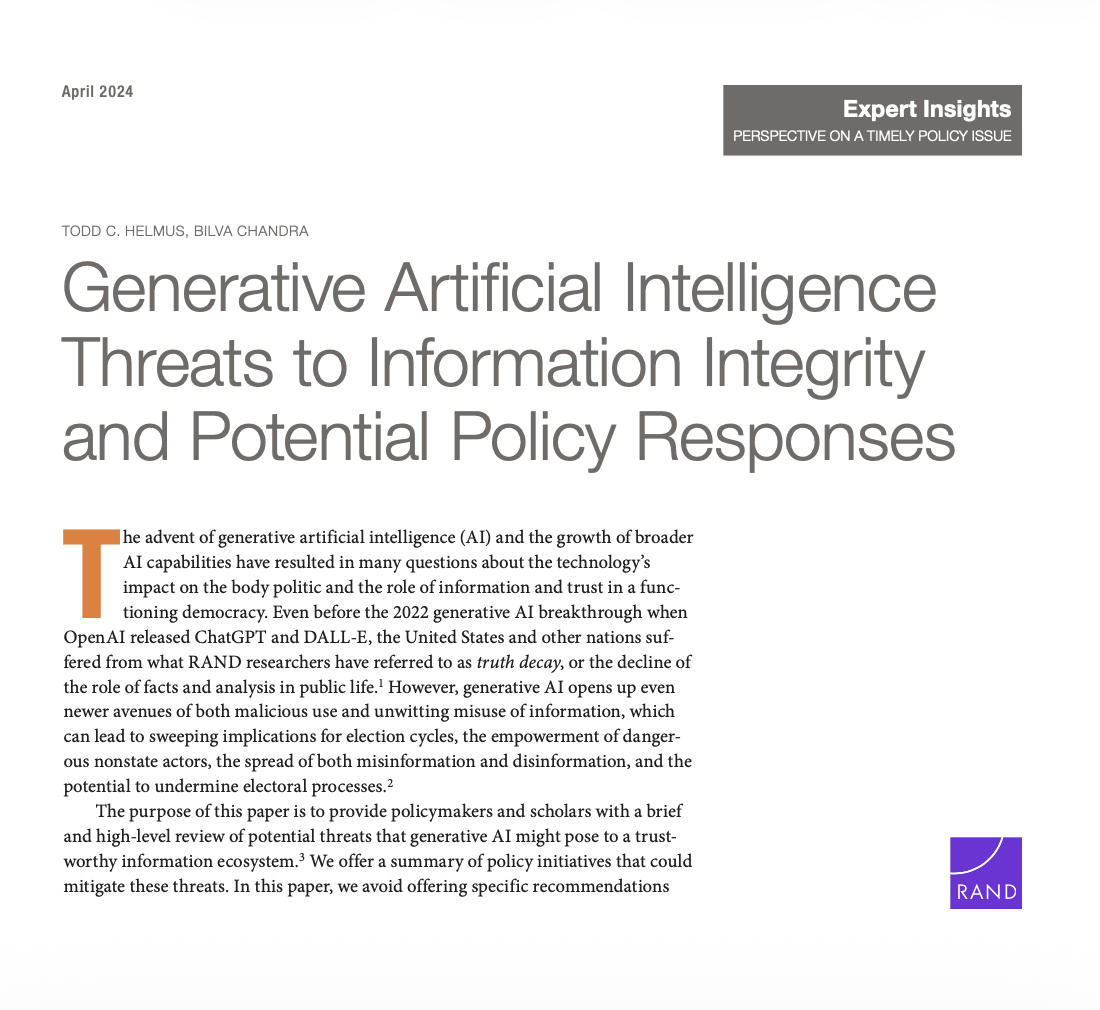
Generative AI Threats to Democracy and Potential Policy Responses
Guided U.S. Senate deliberations on regulatory initiatives to address generative AI risks to democratic institutions and information ecosystems.
Prevalence of Veteran Support for Extremist Groups and Extremist Beliefs: Results from a Nationally Representative Survey of the U.S. Veteran Community
This RAND survey of nearly 1,000 veterans finds no evidence that the veteran community as a whole supports violent extremism at higher rates than the general public, but flags that most veterans endorsing political violence (17.7%) are not tied to any specific group—leaving them potentially exposed to recruitment by emerging movements—with Marine Corps veterans showing the highest support across services.
Assessment of the State and Local Anti-Terrorism Training (SLATT) Program
The authors of this study assessed the State and Local Anti-Terrorism Training (SLATT) Program which is designed to provide counterterrorism training to state, local, and tribal law enforcement personnel.
Countering Violent Extremism in the U.S. Military
This RAND report adapts civilian terrorism prevention and CVE frameworks for the Department of Defense, organizing interventions by phase—early (online messaging, community resilience), middle (referral promotion, law enforcement training), and late (prison-based mental health care)—and recommending DoD adopt military-tailored versions while building out research on the prevalence, in-unit dynamics, and manifestation of extremism in the force.
Assessing Outcomes of Online Campaigns Countering Violent Extremism: A Case Study of the Redirect Method
This RAND assesses the Redirect Method, which uses targeted ads to divert users searching for violent jihadist or far-right content toward counter-narrative videos and it offers recommendations for improving evaluations of online campaigns.