
Searchable Publication List

Veteran Narratives of Support for Extremist Groups and Beliefs: Results from Interviews with Members of a Nationally Representative Survey of the U.S. Veteran Community
This RAND report draws on 2023 follow-up interviews with veterans who had endorsed extremist beliefs in a 2022 survey, finding that negative and traumatic experiences during service and transition are tightly interwoven with their paths into extremism—pointing to policy implications that will require further research to operationalize.
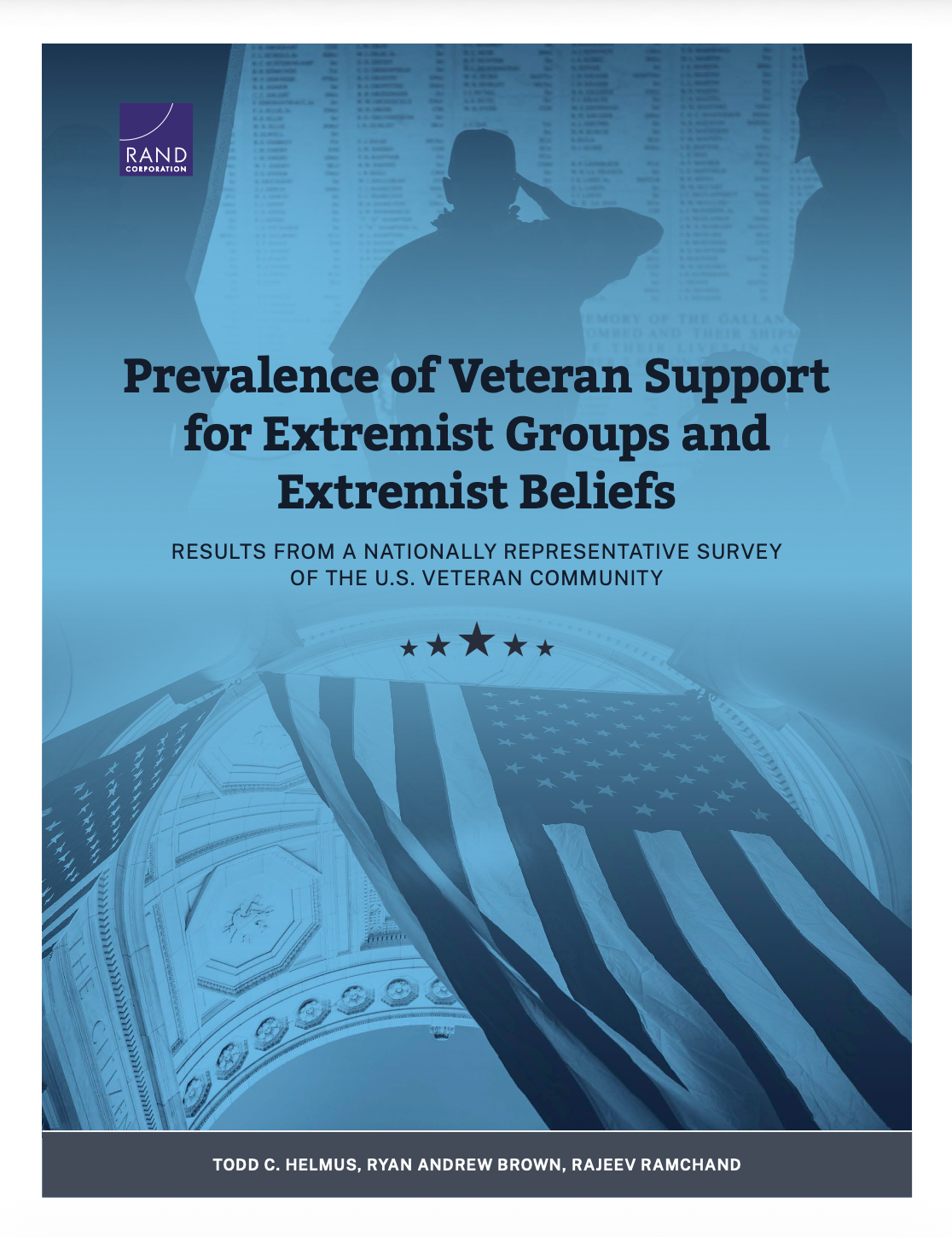
Prevalence of Veteran Support for Extremist Groups and Extremist Beliefs: Results from a Nationally Representative Survey of the U.S. Veteran Community
This RAND survey of nearly 1,000 veterans finds no evidence that the veteran community as a whole supports violent extremism at higher rates than the general public, but flags that most veterans endorsing political violence (17.7%) are not tied to any specific group—leaving them potentially exposed to recruitment by emerging movements—with Marine Corps veterans showing the highest support across services.
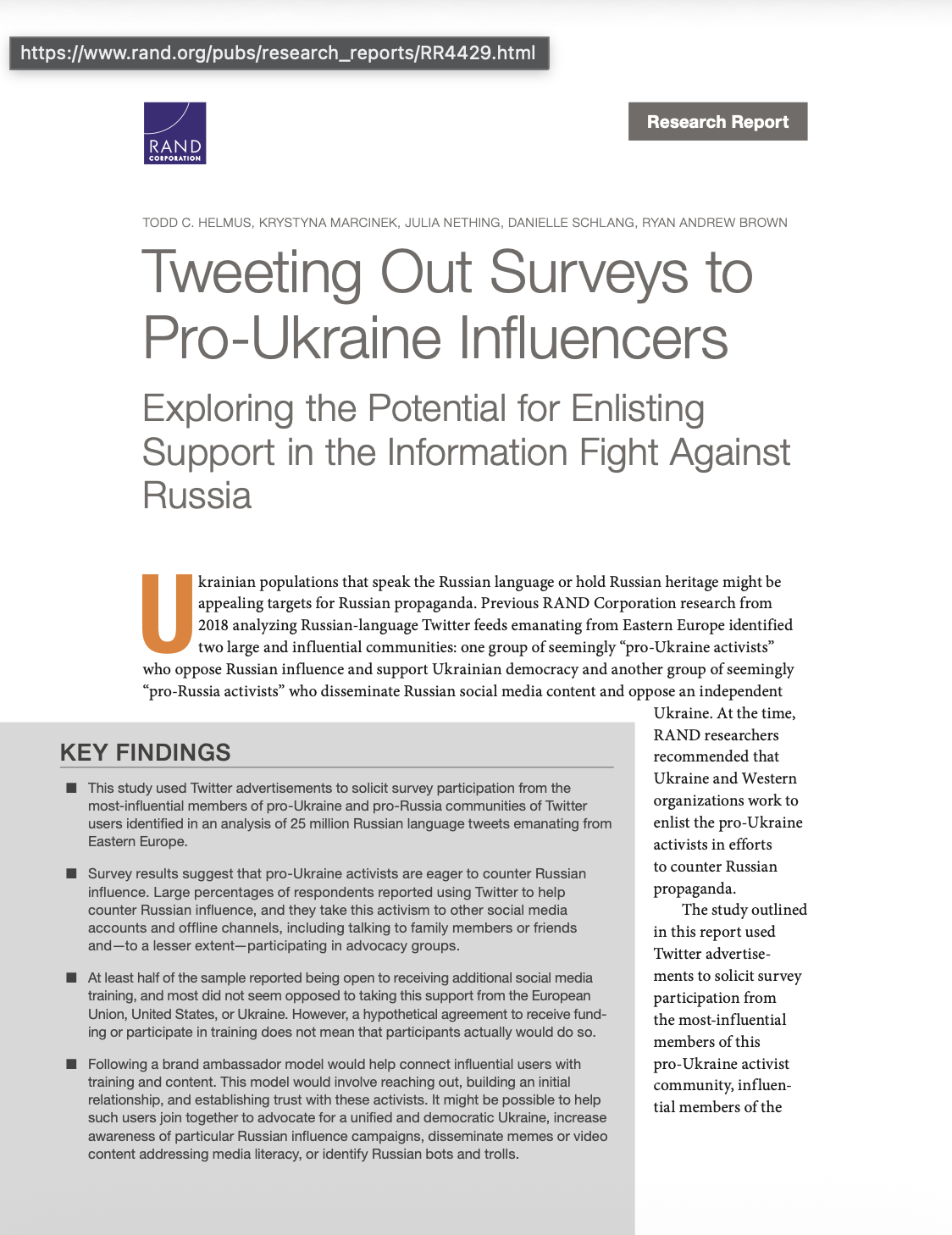
Tweeting Out Surveys to Pro-Ukraine Influencers: Exploring the Potential for Enlisting Support in the Information Fight Against Russia
This RAND survey of pro-Ukraine and pro-Russia Russian-language Twitter activists finds pro-Ukraine users already pushing back against Russian influence online and offline and open to outside training and support, pointing to a brand ambassador model for connecting influential activists with training, content, and coordinated counter-influence efforts.
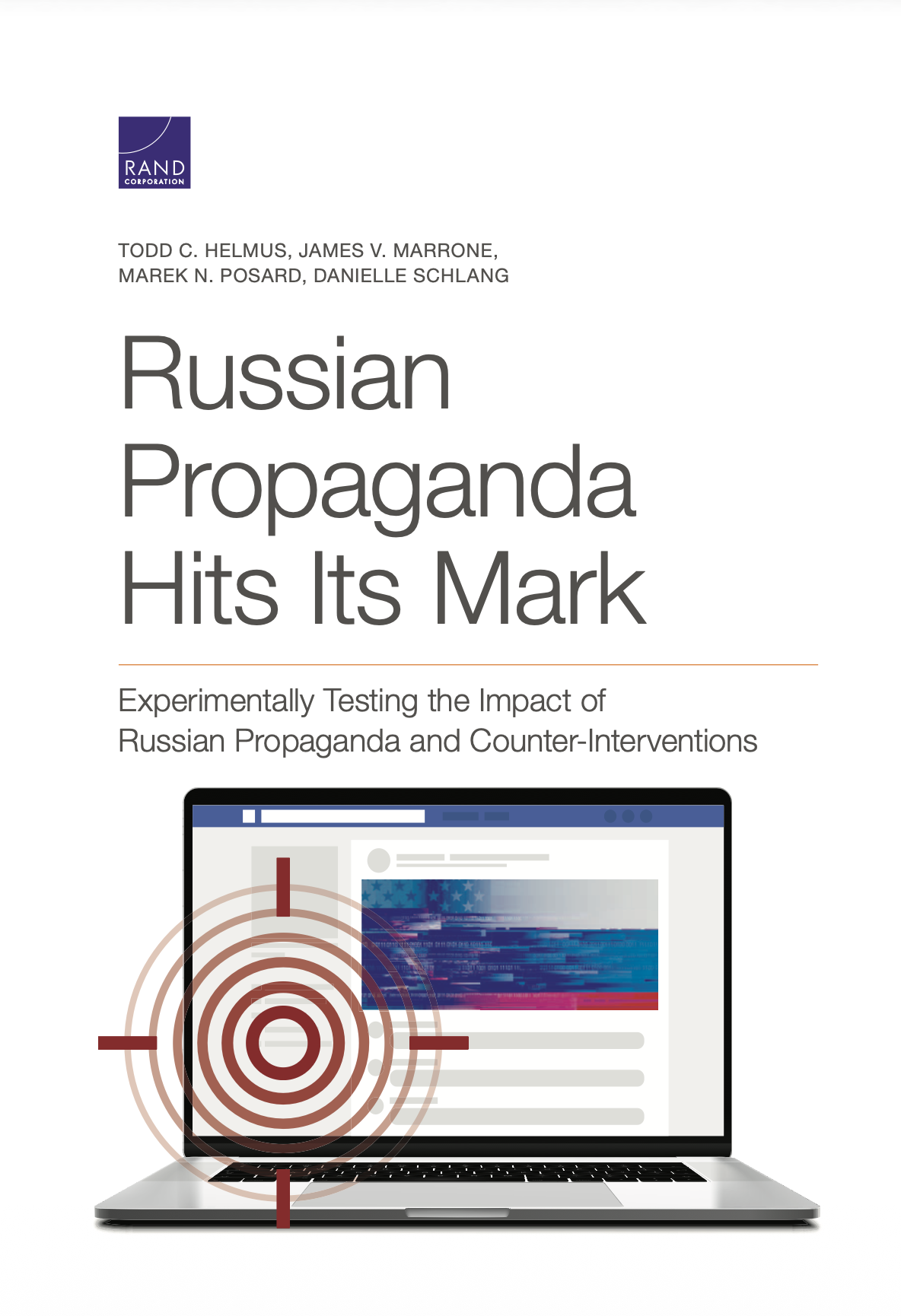
Russian Propaganda Hits Its MarkExperimentally Testing the Impact of Russian Propaganda and Counter-Interventions
We RAND randomized controlled trial using actual Russian propaganda finds that the content reliably elicits strong partisan reactions but that revealing its Russian source and showing a brief media literacy video reduce engagement—especially among Partisan Left and Partisan Right audiences—pointing to source-unmasking tools, generalized warnings, inoculation approaches, and scalable social media literacy as viable countermeasures.
Countering Violent Extremism in Indonesia: using an Online Panel Survey to Assess a Social Media Counter-Messaging Campaign
This RAND evaluation was part of a ground breaking set of studies experimentally testing the impact of Department of State funded counter violent extremism programs.