
Investing in the Fight: Assessing the Use of the Commander’s Emergency Response Program in Afghanistan
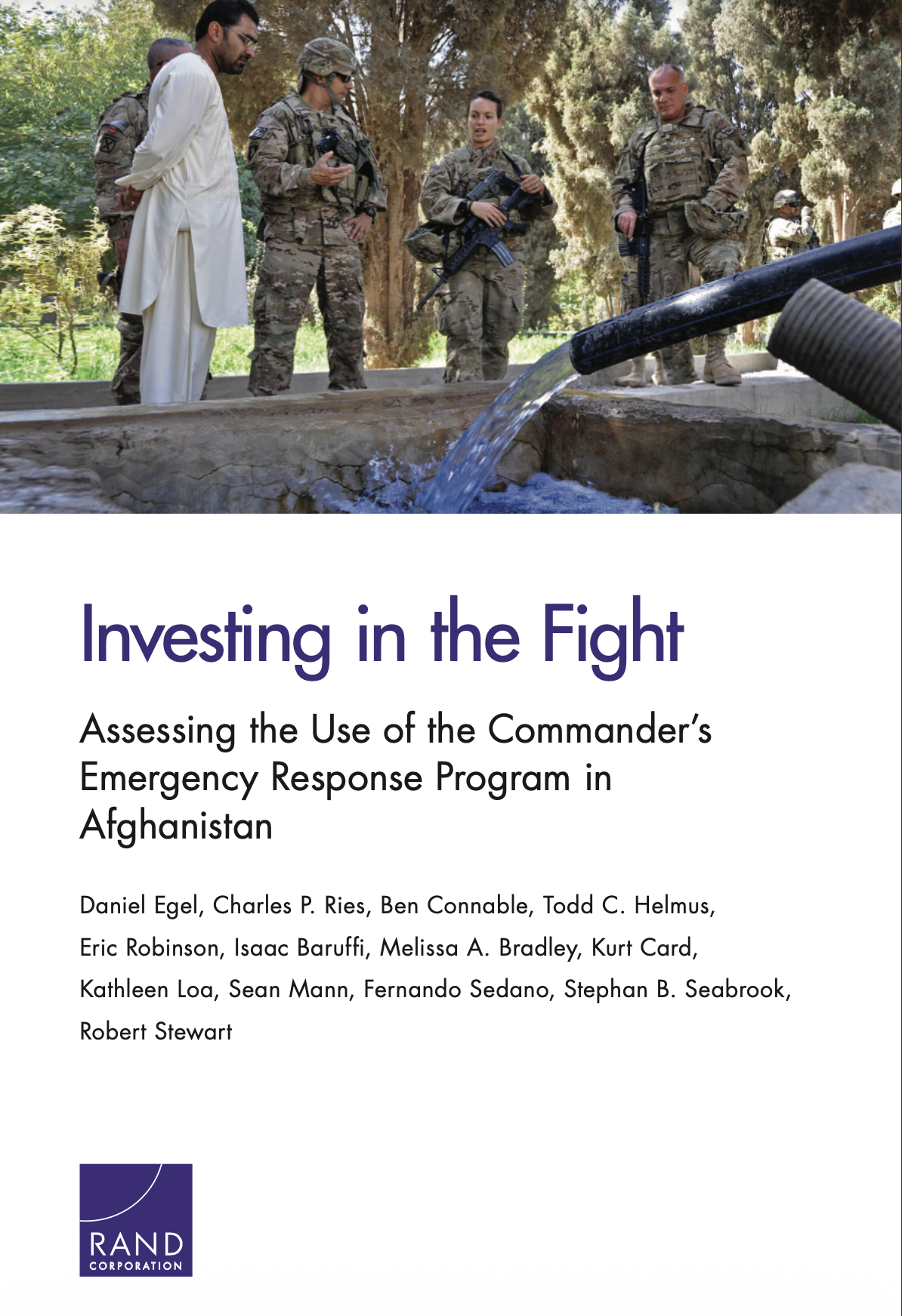
This RAND report assesses the Commander's Emergency Response Program (CERP) in Afghanistan during the 2010–2013 counterinsurgency period, combining interviews with nearly 200 military officers and NCOs who actually designed and ran CERP projects with a geospatial quantitative analysis linking CERP spending to population outcomes (movement, economic and agricultural activity) and coalition outcomes (intelligence, attacks, freedom of movement). CERP was effective when nested inside broader operations, with long-term gains in local security and economic activity and reductions in attacks on coalition forces. Quantitative spending measures appear to function less as a clean signal of CERP impact than as a proxy for overall coalition activity—kinetic for compensation, local security, and humanitarian spending; developmental for agriculture, services, transportation, and water.
The on-the-ground view was that "softer" outcomes—rapport, freedom of movement, local governance, and security—mattered more than infrastructure and succeeded 75–80 percent of the time, even as nearly all operators flagged serious implementation problems. The authors recommend restricting CERP to small-dollar projects (easier to implement, monitor, and perceived as more effective), building real transition processes between rotating units to avoid stranded projects, ensuring all relevant units have trained personnel rather than relying on scarce civil affairs teams, and creating a more formal USAID and civilian role in implementation.