
Searchable Publication List
Counter-Radicalization Bot Research: Using Social Bots to Fight Violent Extremism
This RAND report asks whether social bots—automated accounts capable of detecting targets and delivering counter-messaging at scale—could help close that narrow window. The answer: technically feasible, but the harder questions are legal, ethical, and geopolitical.
Invisible Wounds of War: Psychological and Cognitive Injuries, Their Consequences, and Services to Assist Recovery
This landmark study of OEF/OIF veterans finds that PTSD, major depression, and traumatic brain injury are widespread "invisible wounds" with effective evidence-based treatments that would pay for themselves within two years if DoD, the VA, and the broader health system made the system-level changes needed to deliver them.
The Long Shadow of 9/11: America’s Response to Terrorism
This book provides a multifaceted array of answers to the question, In the ten years since the 9/11 terrorist attacks, how has America responded? In a series of essays, RAND authors lend a farsighted perspective to the national dialogue on 9/11's legacy.
Programs Addressing Psychological Health and Traumatic Brain Injury Among U.S. Military Servicemembers and Their Families
This RAND report catalogs 211 DoD psychological health and TBI programs, finds significant duplication and little evidence on what works, and recommends strategic planning, centralized coordination, rigorous evaluation, and consistent use of evidence-based interventions.
''People Make the City,'' Executive Summary: Joint Urban Operations Observations and Insights from Afghanistan and Iraq
This RAND study draws on extensive documentary material and interviews with American, British, and Australian military and civilian personnel from Operations Enduring Freedom and Iraqi Freedom to identify tools that help militaries conduct urban combat and post-conflict restoration more effectively, on the premise that preserving innocent life and rebuilding what war destroys are now strategic obligations because cities are the keys to nations.
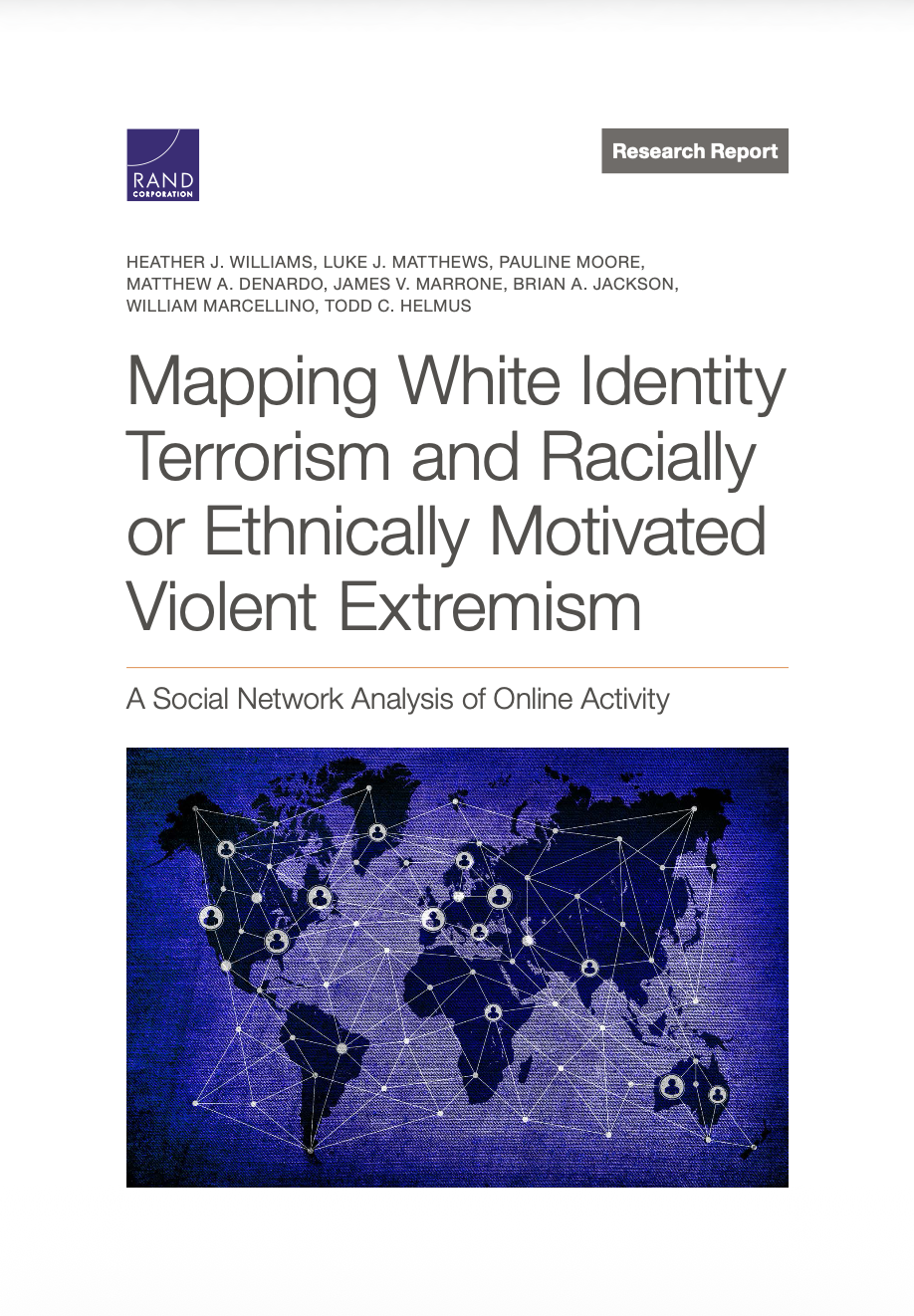
Mapping White Identity Terrorism and Racially or Ethnically Motivated Violent Extremism: A Social Network Analysis of Online Activity
This RAND report finds that the global online REMVE network is primarily fueled by U.S. users and that, because the movement is post-organizational and ideologically entrenched, the U.S. needs a multifaceted national counter-REMVE strategy rather than one centered on specific groups or actors.
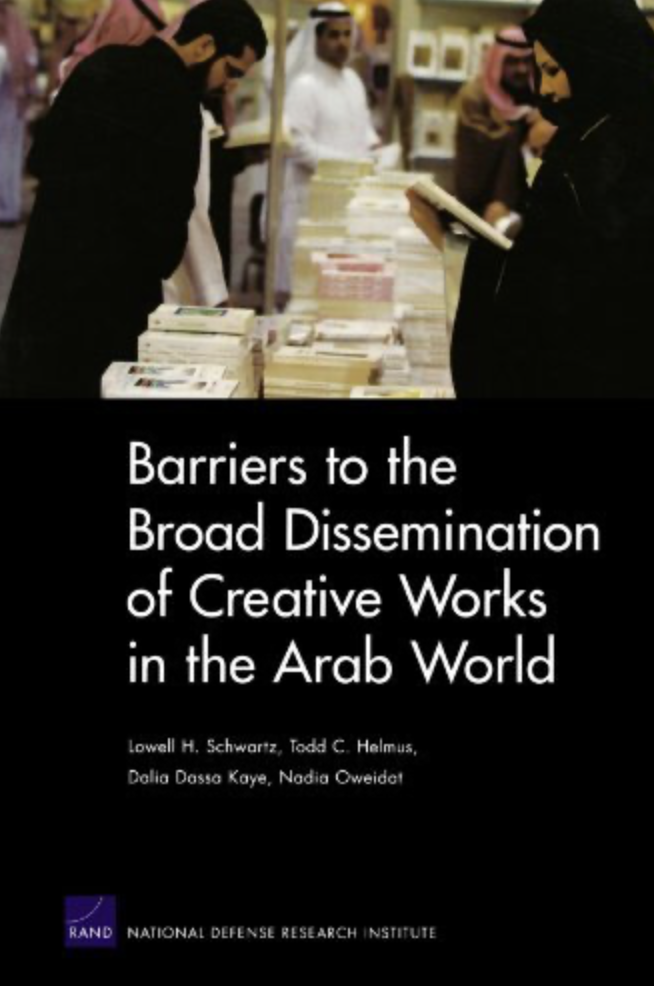
Barriers to the Broad Dissemination of Creative Works in the Arab World
This monograph examines the barriers to the broad dissemination of such works, with a focus on Arabic literature, and suggests ways in which nongovernmental organizations, international allies, and the U.S. government can assist Arab writers and artists in overcoming these barriers.
Steeling the Mind: Combat Stress Reactions and Their Implications for Urban Warfare
In this report with over 120 academic citations, the authors provide an overview of combat stress reaction (CSR) in the form of a review of its known precipitants, its battlefield treatment, and the preventive steps commanders can take to limit its extent and severity. In addition, the authors use historical battlefield reports to assess the risk urban operations pose to CSR.
China’s Role in the Global Development of Critical Resources
This RAND study examined Chinese foreign investment in critical resources and energy infrastructure—coal power in Indonesia, Pakistan, and South Africa; transmission and distribution in several Latin American countries; and global seabed mining—looking for evidence of the behaviors most often alleged: predatory contracting, strategic positioning, disregard for environmental and labor standards, and market-influencing disinformation.
Assessment of the State and Local Anti-Terrorism Training (SLATT) Program
The authors of this study assessed the State and Local Anti-Terrorism Training (SLATT) Program which is designed to provide counterterrorism training to state, local, and tribal law enforcement personnel.
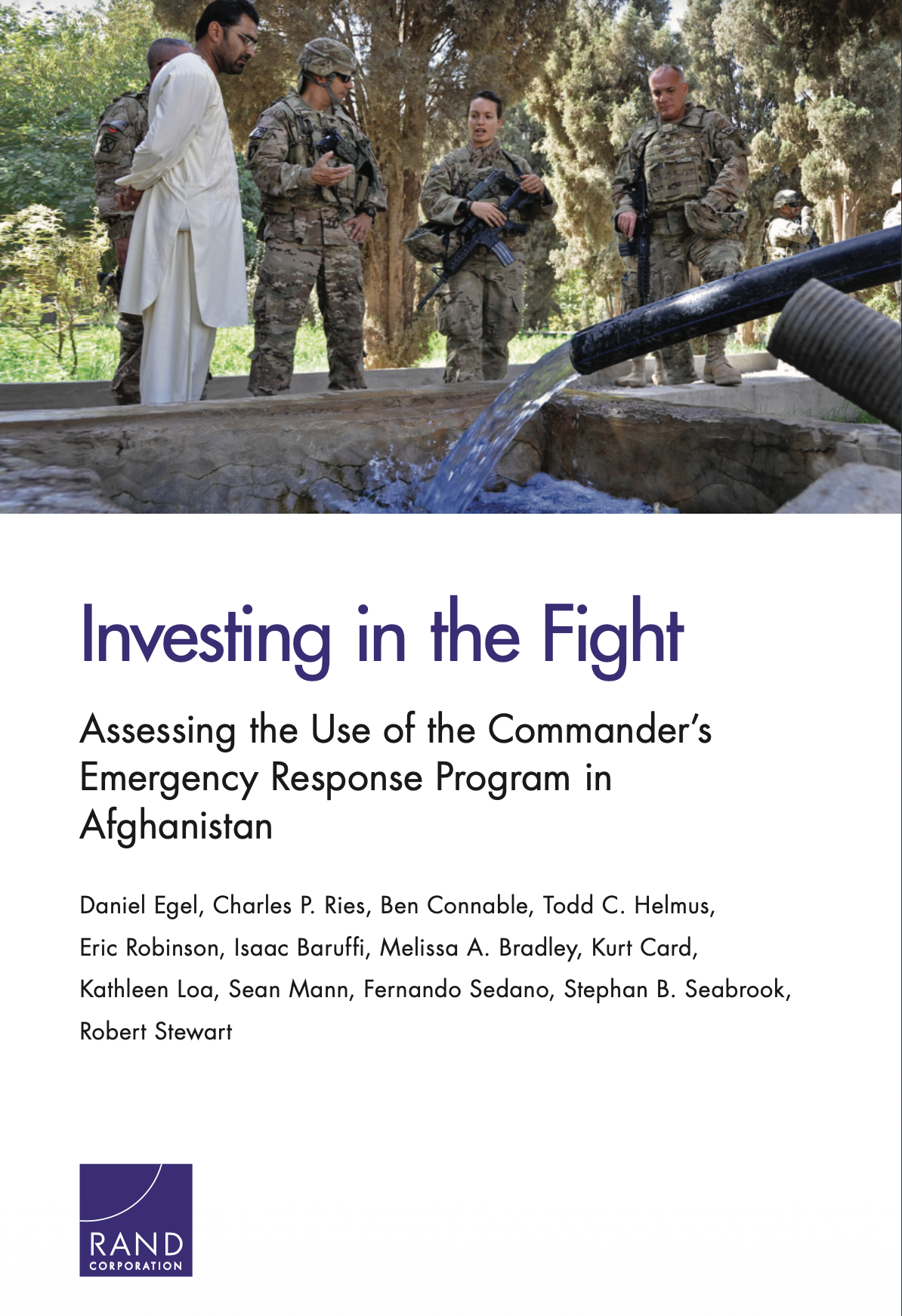
Investing in the Fight: Assessing the Use of the Commander’s Emergency Response Program in Afghanistan
This RAND report finds that CERP in Afghanistan was effective when nested within operations—especially for "softer" outcomes like rapport and local governance—and recommends restricting it to small-dollar projects, building unit-to-unit transition processes, training all relevant personnel, and formalizing a USAID role.
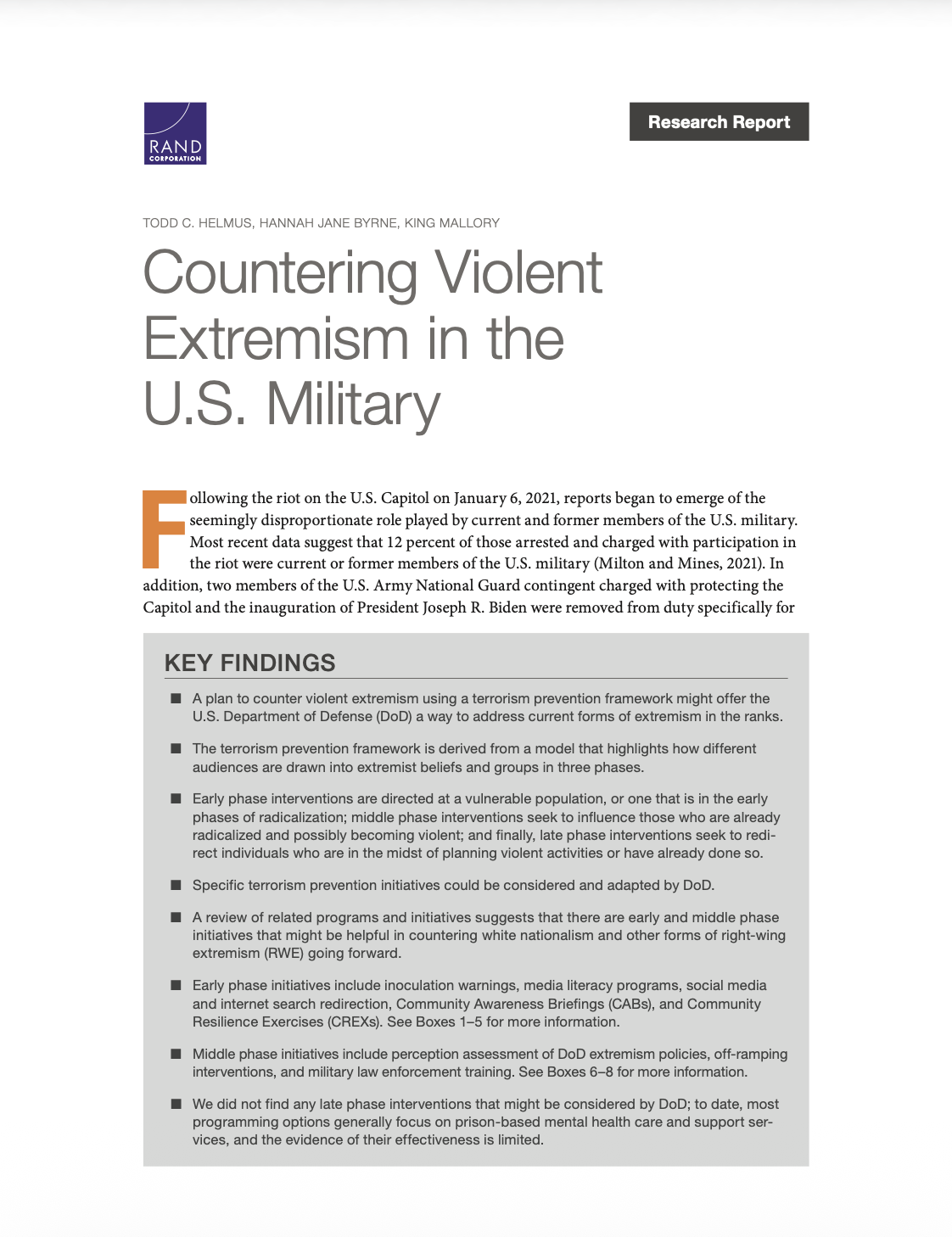
Countering Violent Extremism in the U.S. Military
This RAND report adapts civilian terrorism prevention and CVE frameworks for the Department of Defense, organizing interventions by phase—early (online messaging, community resilience), middle (referral promotion, law enforcement training), and late (prison-based mental health care)—and recommending DoD adopt military-tailored versions while building out research on the prevalence, in-unit dynamics, and manifestation of extremism in the force.
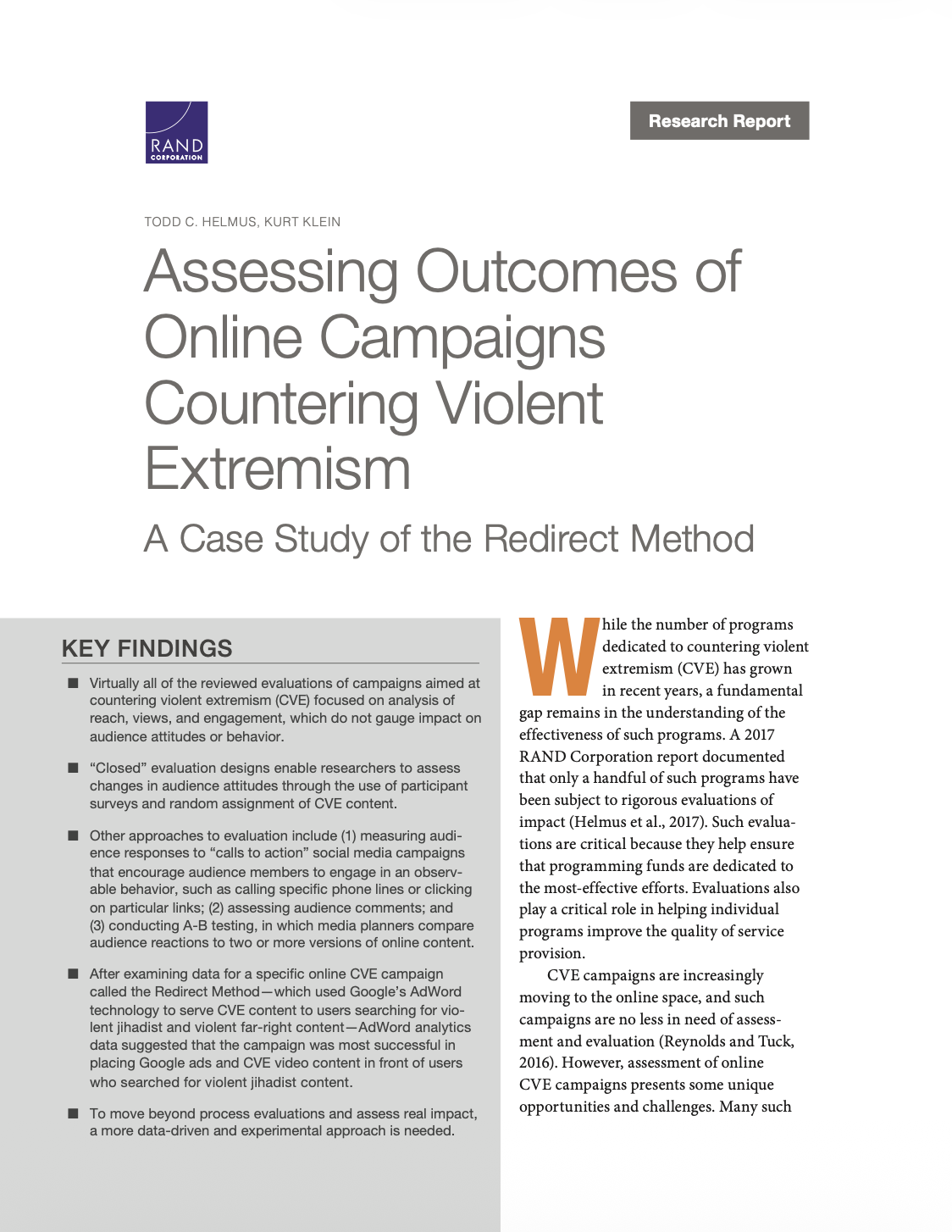
Assessing Outcomes of Online Campaigns Countering Violent Extremism: A Case Study of the Redirect Method
This RAND assesses the Redirect Method, which uses targeted ads to divert users searching for violent jihadist or far-right content toward counter-narrative videos and it offers recommendations for improving evaluations of online campaigns.